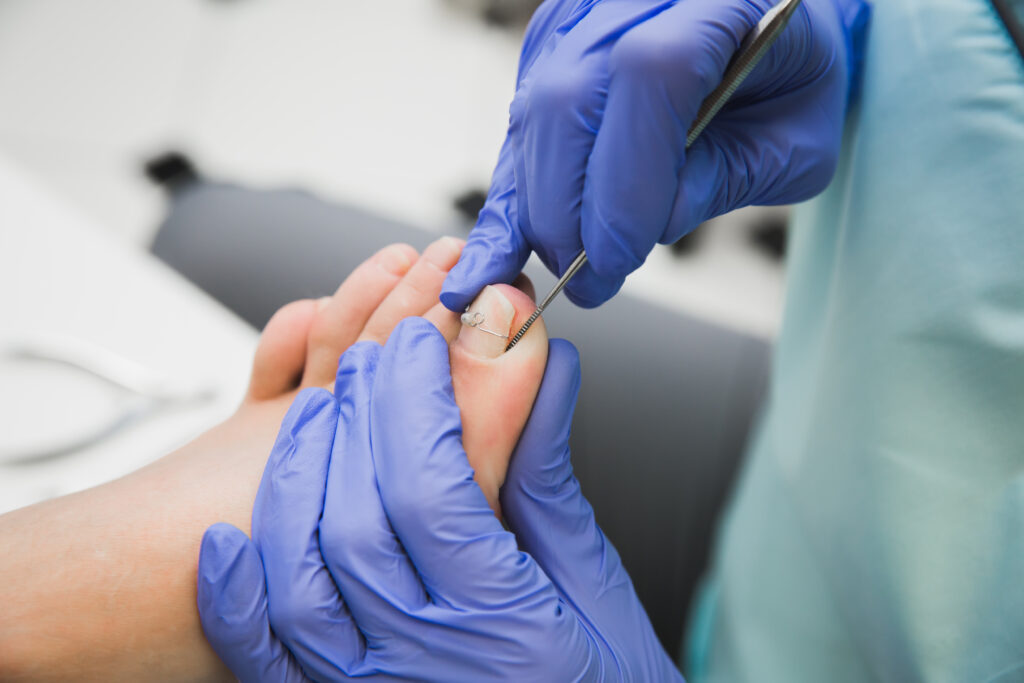
Paronychia and ingrown toenails are painful conditions affecting the toenails that may require medical treatment. However, there are some key differences between the two.
This comprehensive guide by the Foot Specialists of Birmingham weighs paronychia vs ingrown toenails, explains key differences between the two conditions, and discusses possible treatments for both.
What is Paronychia?
Paronychia is a fairly common nail infection that can affect both fingernails and toenails. It occurs when bacteria enter the broken skin near the cuticle, leading to inflammation.
This condition usually results from a staph infection acquired through exposure to irritants, nail-biting, or preexisting cuts. People with certain skin conditions or those who work with water may be at higher risk of paronychia.
Symptoms of paronychia include:
- Pain or swelling around the nail
- Skin that is hot to the touch
- Pus buildup under the affected skin
- Lines of redness extending from the toe up your foot
Acute vs Chronic Paronychia
There are two types of paronychia, both of which have similar symptoms.
Acute paronychia develops quickly (typically within 2 to 5 days) and lasts less than 6 weeks. The acute infection affects only a single nail and doesn’t extend beyond the nail fold.
Chronic paronychia develops more slowly than acute paronychia, typically lasting longer than six weeks. It can affect multiple nails simultaneously, and a fungal infection may develop comorbidly alongside the bacterial infection.
What is an Ingrown Toenail?
An ingrown toenail develops when the edge of your toenail starts growing into your skin and inflames the tissue.
Ingrown toenail symptoms include:
- Pain and or discomfort along the edge of the nail
- Red, swollen, or thick skin bordering the nail
- Clear fluid drainage
Paronychia vs Ingrown Toenail: What’s the Difference?
While ingrown toenails can cause paronychia, they are distinct conditions. Paronychia refers to an infection of the nail, while an ingrown toenail is a nail that is growing into the skin surrounding it.
Both paronychia and ingrown toenails can cause pain, redness, and swelling on affected nails, and both may require medical attention. However, ingrown toenails are not inherently infected by bacteria or fungus.
Treatment Options
For both paronychia and ingrown toenails, medical intervention may be required.
Paronychia may be treated with antibiotics, antifungal agents, or by draining pus-filled abscesses. Patients with paronychia should also keep affected areas dry and clean, carefully avoiding prolonged exposure to moisture and irritants.
For ingrown toenails, trimming, protective pads, or partial nail removal may be recommended.
Seeing signs of paronychia, ingrown toenails, or both?
It’s time to get your toenails back to a healthy, pain-free state. The Foot Specialists of Birmingham are here to help.
Contact our office today to book an appointment with our renowned podiatrist, Dr. Linde. Our staff has years of experience treating paronychia, ingrown toenails, and related problems. We are proud to be the trusted podiatry provider of patients across Birmingham, Hoover, and Vestavia Hills, and we’re eager to help you, too!

