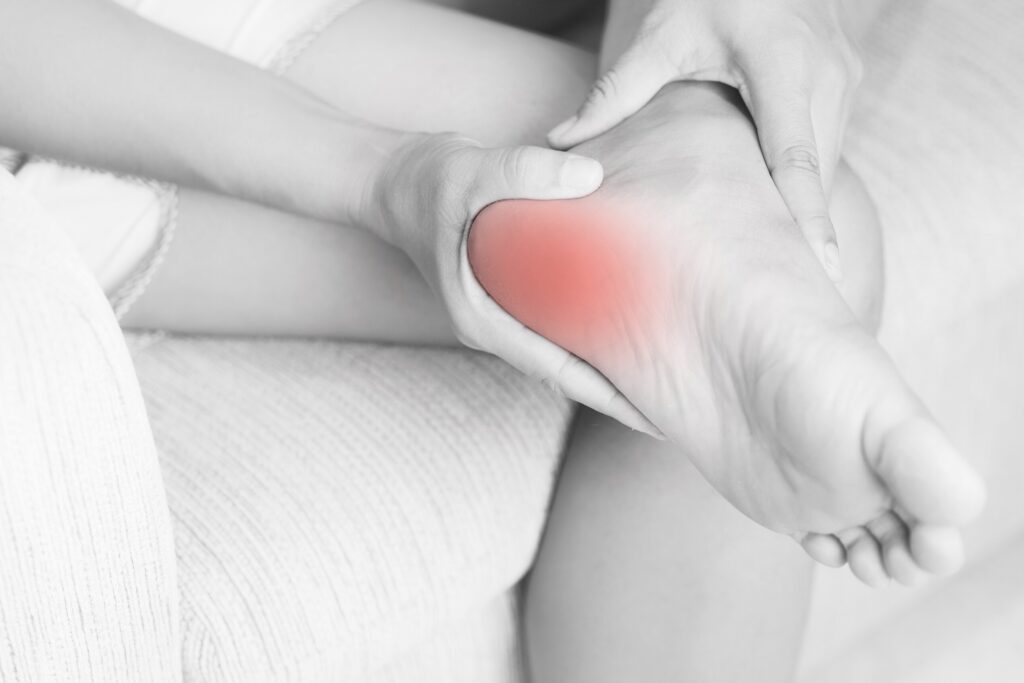
Obesity and plantar fasciitis are two very common health issues here in the U.S., and they’re related in a few different ways. In this blog, Dr. Linde and our team from the Foot Specialists of Birmingham examine this correlation, explain how midlife age, weight, and hormones affect chronic heel pain, and answer the common question: Does losing weight help plantar fasciitis?
Aging and Low Estrogen
Hormone levels in the body change throughout our lives, and many decline as we age; estrogen is a common example, especially for women in menopause. Without a consistent supply of estrogen, collagen production slows, leading the plantar fascia to lose laxity and elasticity and become weak.
Excess Weight & Obesity
The extra weight that obese patients carry constantly strains their lower bodies, placing stress on the plantar fascia, which can lead to inflammation and small tears that recur as plantar fasciitis. Studies have shown that higher BMI and plantar fasciitis are closely related, and that the likelihood of developing plantar fasciitis is three times higher than average among people with a BMI of 30 or more.
Does dieting and losing weight help plantar fasciitis?
Losing weight and lowering your BMI takes that extra burden off the plantar fascia, allowing the tissue to heal rather than worsen. Having the right diet is essential for attaining and maintaining a healthy BMI.
Great steps you can take to improve your diet include reducing your calorie intake, cutting out added sugars, and eating plenty of nutrient-dense foods with natural fiber, protein, and complex carbohydrates, such as fruits, veggies, whole grains, nuts, beans, and legumes. Sticking to low-inflammatory foods as much as possible can also help with the painful inflammation of plantar fasciitis.
Calorie-burning exercises help, too, of course, and that doesn’t mean you have to risk triggering a plantar fasciitis flare-up; just stick to exercises that impart minimal impact on the soles of your feet, like elliptical training instead of running on the treadmill.
Get Guidance from a Plantar Fasciitis Expert
Plantar fasciitis is a painful condition, and the risk of developing it grows higher as you get older. Still, there’s always hope for healing and pain relief with proactive treatment and lifestyle changes with a great podiatrist’s guidance.
Whether your plantar fasciitis impacts your daily function or just bothers you a little, Dr. Linde and our team at Foot Specialists of Birmingham can help identify the source, explain the problem, and provide effective treatment options that align with your overall picture of health.
Give us a call at 205-445-0661 or schedule an appointment today to begin your journey to plantar fasciitis relief!

