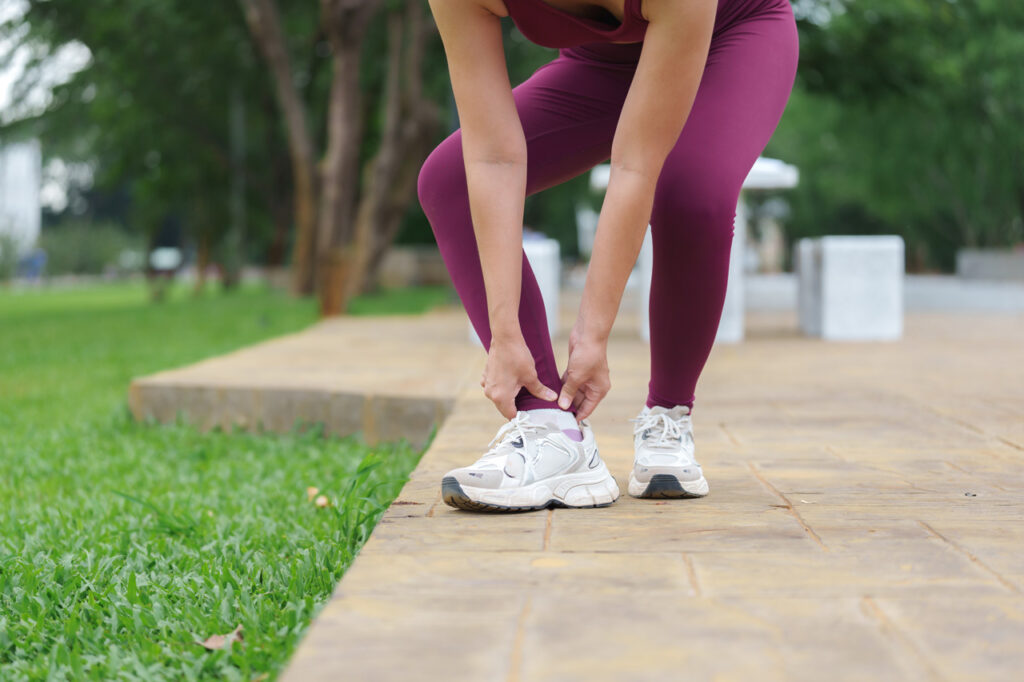
For athletes with plantar fasciitis, waking up with stabbing foot pain is a reality that can show up at the worst times. The good news is that there are exercises and precautions you can take to minimize your chances of waking up with foot pain at the most inconvenient time: on race day.
Here’s what athletes with plantar fasciitis can do about it:
Watch Your Pain Levels Before Race Day
Knowing your pain threshold is critical because not all plantar fasciitis pain is the same. You’ll likely be able to push through if your pain stays around a level 4 or 5 out of 10 on training days. Stay mindful of how long it lingers and how long it takes to return to normal, though. If your pain doesn’t return to baseline after 24 hours, that’s a sign that your body needs more recovery time before you train again.
Many runners are tempted to push past that signal to stay on top of their training goals, but doing so is often how a mild case of plantar fasciitis turns into a chronic problem. Running with plantar fasciitis is possible, but it needs to be done with caution to avoid worsening the condition.
Swap Out Worn-Down Shoes
Running shoes lose their shock absorption after 300–500 miles. Before a race, this matters more than ever, since worn-out soles mean more pressure being applied directly to your plantar fascia, which is the last thing you need when preparing for a long run.
Replace your shoes sooner rather than later, and try to rotate between at least two pairs during training so your feet aren’t taking the same level of impact every day. And if you’ve been wondering whether custom orthotics might help, this is also a good time to look into them. Orthotics can significantly reduce the load on your foot arch during high-mileage training.
Prioritize Stretching & Warm-Up
Plantar fascia tissue becomes stiff when damaged or overused, leading to poor shock absorption and increased pain. Before every training session and on race day, ensure you have enough time to stretch and thoroughly warm up the tendons, ligaments, and muscles in your feet. Calf stretches, toe pulls, and Achilles tendon stretches all help to loosen the tissue and stimulate blood flow to the area. And don’t forget to do cool-down stretches when you’re finished, either, to help with recovery.
We cover some of these stretches in more detail in our blog post on running with plantar fasciitis.
Add Cross-Training to Your Schedule
Besides the fact that it’s good to include various types of exercise to ensure you’re working all of your muscle groups, adding cross-training to your workout schedule is a great way to help ease your plantar fasciitis during a flare-up. Cycling, swimming, water running, and elliptical training are just a few solid options to maintain your cardiovascular fitness that don’t involve pounding your soles on the pavement.
Also, be intentional about incorporating rest days into your exercise schedule. Time at rest is when your plantar fascia is actually repairing itself.
Use Passive Support Tools
Incorporating night splints, kinesiology tape, and compression socks into your daily routine can all work together to help prime your legs and feet in the weeks leading up to race day. Night splints gently stretch the plantar fascia while you sleep, helping reduce the intensity of pain from your first steps in the morning.
During training and daily activities, wearables like kinesiology tape provide support, and compression socks can increase circulation to the area to decrease swelling. Compression socks can also be helpful while relaxing upright (sitting or standing); it is not recommended to wear them in bed or lying down, as this can cause skin damage or decrease blood circulation in the toes.
Got a race coming up in Birmingham? See a Podiatrist to put your best foot forward:
If your pain has been ongoing for several weeks and at-home measures aren’t making a difference, get checked by a podiatrist before race day, not after. A podiatrist can evaluate your gait, assess what’s causing the inflammation, and devise a real plan that fits your training timeline.
At Foot Specialists of Birmingham, Dr. Linde and our team work with athletes to address heel pain before it becomes a bigger problem in their lives. If you’re dealing with plantar fasciitis and you have a race coming up, give us a call at 205-445-0661 or request an appointment. We’ll discuss your situation and put together a customized treatment plan, so you’re ready to hit the ground running on race day!

