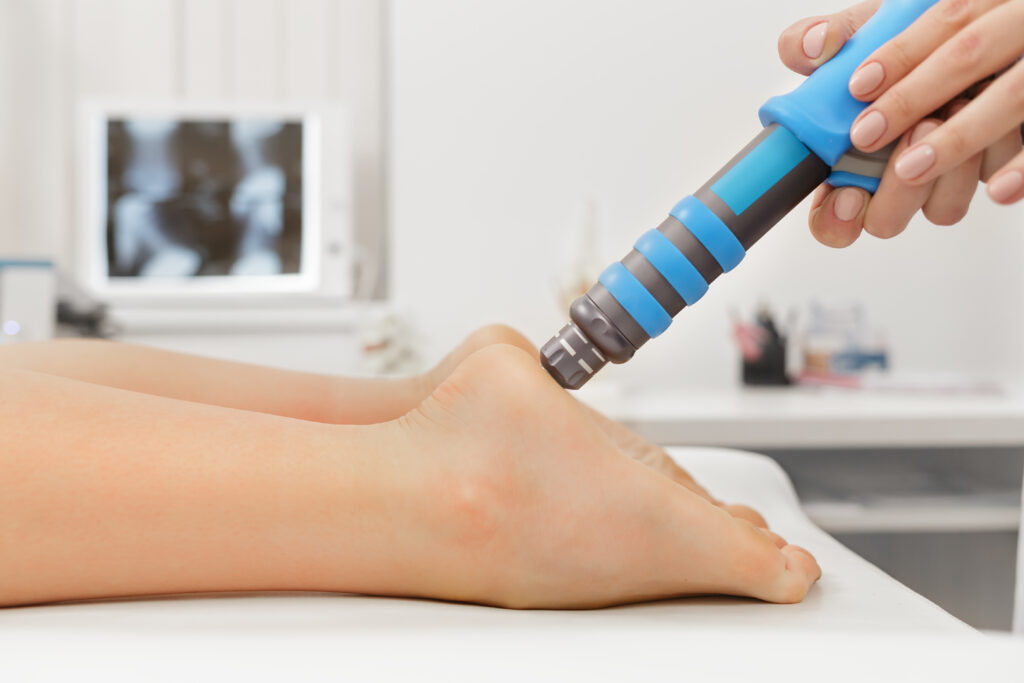
At the Foot Specialists of Birmingham, our podiatrists have comprehensive training to get you back on your feet. We recommend extracorporeal shock wave therapy for plantar fasciitis as a noninvasive treatment option because it dramatically decreases pain for many of our patients. Like any medical treatment, shock wave therapy has pros and cons.
Our specialists provide specialized treatments so you can put your best foot forward. Here’s what you should know about extracorporeal shock wave therapy for plantar fasciitis, and why it could be the right solution for you.
What is Plantar Fasciitis?
Plantar fasciitis is the most prevalent condition leading to lower heel pain. It has many potential causes, such as wearing the wrong type of shoe, standing for extended periods, how your foot rolls when it hits the ground, obesity, and many other factors. Because it occurs for many reasons, it affects a large portion of the population.
Plantar fasciitis involves inflammation, soreness, and cramping within the strip of fascia that vertically spans the bottom of one’s foot (AKA the “plantar fascia”). It is a consequence of repetitive lesions and chronic inflammation in the plantar aponeurosis, and the pain causes difficulty that can affect a patient’s quality of life. The condition requires treatment; otherwise, scar tissue begins to form.
Learn more about the Consequences of Untreated Plantar Fasciitis on our blog.
How Is It Diagnosed?
Diagnosing Plantar fasciitis requires a physical examination. We typically order imaging tests (X-ray, MRI, and ultrasound) to assess the condition of the heel bone and the plantar fascia. From here, we recommend treatment options. We start slowly, depending on the severity of the condition, and work our way up as needed, depending on the patient’s progress. Here’s what this looks like:
- Resting and stretching
- Icing the inflamed area
- Changing footwear/custom orthotics
- Extracorporeal shock wave therapy
- In extreme cases, surgery
Extracorporeal Shock Wave Therapy for Plantar Fasciitis
Extracorporeal Shock Wave Therapy for Plantar Fasciitis is a treatment option we typically recommend because it is effective and provides quick relief. Here are the upsides:
- Non-invasive with minimal recovery
- It’s considered safe
- Alleviates pain quickly
- Low risk for complications
With every form of treatment, there can be downsides. Here are a few things we like for our patients to keep in mind:
- It doesn’t work for everyone
- You may need multiple treatments
- It’s not always covered by insurance
- In some cases, the treatment may cause temporary bruising or swelling
Make an Appointment Today
If you are experiencing heel pain that could be plantar fasciitis, don’t wait; contact us today! The best thing you can do is schedule an appointment; we’ll take it from there. Schedule an appointment online or call (205)-445-0661 today!

