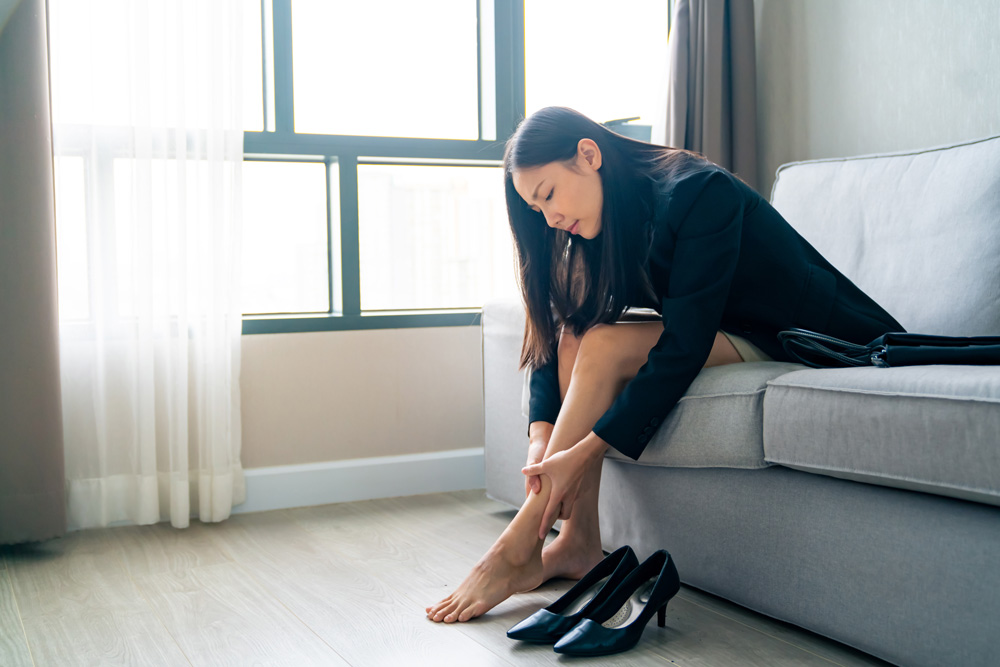
We see many patients who have been living with persistent heel pain, from standing at work, stress, or both.
In this guide by the Foot Specialists of Birmingham, we’ll explain why you get heel pain from standing and stress, and share different approaches you can take to lessen the pain at the source.
The Impact of Stress on Feet
If you experience a lot of stress in your daily life, it can significantly impact your feet.
Here are five ways stress can affect the health of your feet:
- Sometimes, stress can make people feel less inclined to be physically active or more likely to ignore their need for supportive footwear and self-care habits, which may increase foot discomfort over time.
- Stress can cause your muscles to tense up, which may increase strain and discomfort in your feet and heels.
- High stress levels may worsen inflammation throughout the body, potentially aggravating existing foot pain conditions.
- Chronic stress may interfere with sleep quality and recovery, making it harder for your body to heal sore or overworked feet.
- Stress and anxiety can contribute to unconscious habits, such as clenching your toes or changing your gait, which can place additional pressure on your feet.
Why You Get Heel Pain from Standing Jobs
Heel pain from standing jobs often develops because your feet absorb repeated pressure for hours at a time. Jobs like nursing, retail, warehouse work, food service, construction, and teaching can all place significant stress on the heels.
Standing for long periods on hard surfaces can strain the plantar fascia, the thick band of tissue that supports the arch of your foot. Over time, that repeated strain may lead to inflammation and pain, especially near the bottom of the heel. Inflammation of the plantar fascia is known as plantar fasciitis, a condition that you should see a podiatrist for.
Unsupportive shoes, poor posture, excess body weight, and limited opportunities to sit and rest during shifts can also worsen heel pain. Many people notice the discomfort feels strongest first thing in the morning (which is common with plantar fasciitis) or after long workdays.
How to Relieve Heel Pain
One of the best ways to ease heel pain is to provide your feet with better support throughout the day. Shoes with suitable arch support for your foot shape and cushioning can help reduce stress on the heel while standing for extended periods.
Stretching your calf muscles and plantar fascia may also help relieve your heel pain, as well as inflexibility, stiffness, and tension in the foot. Some people benefit from rolling their foot over a frozen water bottle or ice pack after work to reduce soreness and inflammation.
If you have to work long shifts and your management allows it, try alternating between sitting and standing positions, and consider using anti-fatigue mats if you work on hard flooring. Maintaining a healthy weight and replacing worn-out shoes can also make a meaningful difference in reducing ongoing heel pain.
Got Chronic Heel Pain from Standing or Stress?
If none of the above have worked for you, or you’ve noticed your heel pain (from standing, stress, or something else) keeps getting worse, it’s time to see a podiatrist in your area.
Heel pain sufferers in central Alabama, looking for help: we’re here to help. The Foot Specialists of Birmingham, our podiatry practice, specializes in the treatment of heel pain. Our leading podiatrist, Dr. Linde, would be glad to create a custom treatment plan to get you the pain relief you’ve been longing for.
Becoming a patient and making your first appointment with us is easy. Contact our office, and our friendly staff will guide you step by step through the rest of the process to get you on our schedule.

