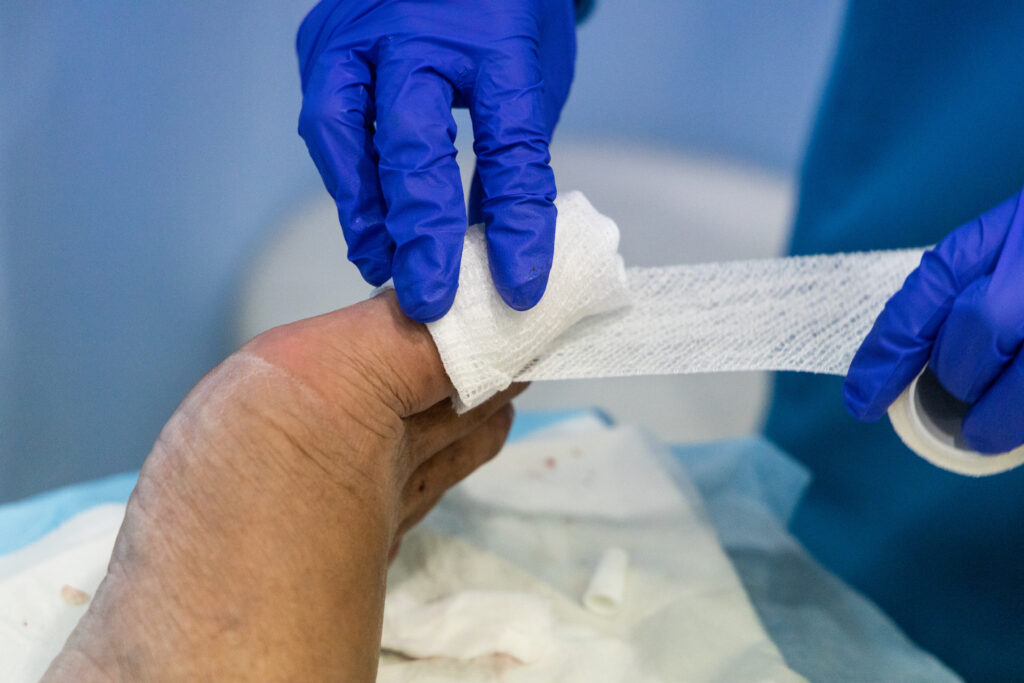
There are a few types of ingrown toenail surgery, all performed by a podiatrist as simple, in-office procedures. While these treatments are minimally invasive, proper ingrown toenail surgery recovery care is essential for healing quickly and avoiding complications.
In this blog, Dr. Linde and the Foot Specialists of Birmingham team will walk you through the three main types of ingrown toenail surgery, then explain what to expect during recovery and how to care for your foot at home.
Types of Ingrown Toenail Surgery
There are three main types of ingrown surgery that your podiatrist can perform:
- Partial nail removal: Partial removal is called lateral nail avulsion. During the procedure, your podiatrist will cut away and remove the sides of the affected nail plate.
- Total nail removal/avulsion: In more severe cases, complete nail removal may be required. This is especially true when the ingrown toenail recurrence is caused by nail thickening. It takes about 18 months for the toenail to grow back.
- Matrixectomy: If ingrowths remain chronic and regrow even after a total removal, we may perform a matrixectomy, chemically neutralizing the matrix to prevent regrowth. The result is a narrower toenail, which dramatically reduces the chance you’ll develop this condition in the future.
We complete all of these procedures in our office using local anesthesia, allowing patients to return home the same day with minimal disruption to their routine.
Ingrown Toenail Surgery Recovery: What to Expect
Immediately After Surgery (First Few Days)
Once the anesthesia wears off, you’ll experience mild pain for the first few days following your ingrown toenail surgery. Still, it is manageable for most patients with over-the-counter pain medications.
You may also experience light bleeding or drainage, which is normal.
Keep your postoperative foot elevated and dry for the first 24 hours. Stay consistent with rest, avoiding pressure on the toe, and basic wound care for the first few days as it begins to heal. For some patients, our individual treatment plans may recommend soaking the surgical site in warm, soapy water 3-4 times a day for 15-20 minutes during this early stage.
The Healing Process in the Weeks After
Ingrown toenail surgery recovery occurs somewhat quickly with proper care.
- Over the first week or two, you’ll see a gradual improvement in the swelling, tenderness, and drainage in the wound and surrounding toe tissue.
- After about two weeks post-op, you can resume normal daily activities, such as working on your feet. However, you must gradually return to exercise and higher-impact activities that could put pressure on the toe.
- Full healing may take several weeks; the recovery timeline depends on the severity of the ingrown toenail before and after surgery.
Ongoing Care for Your Toe Post-Op
Even after the bandages are ready to come off, continue to keep the area clean and wear loose/open-toed shoes.
When to Call a Podiatrist for Ingrown Toenail Surgery Recovery
Ingrown toenail surgery recovery should improve steadily, not worsen. If you experience any of these symptoms post-op, you need to call your podiatrist ASAP:
- Increasing pain, redness, or swelling
- Pus
- Delayed healing
- Recurring ingrown toenails (once/if the toenail regrows)
- Development of hypergranulation tissue
If you’re having complications after an ingrown toenail surgery or believe you would qualify for one, you need to see a podiatrist with a specialty in ingrown toenails, like Foot Specialists of Birmingham. We’re here to help you get back on your feet. Call (205) 445-0661 or contact us online, and our team will be happy to schedule an appointment with Dr. Linde for an evaluation.

