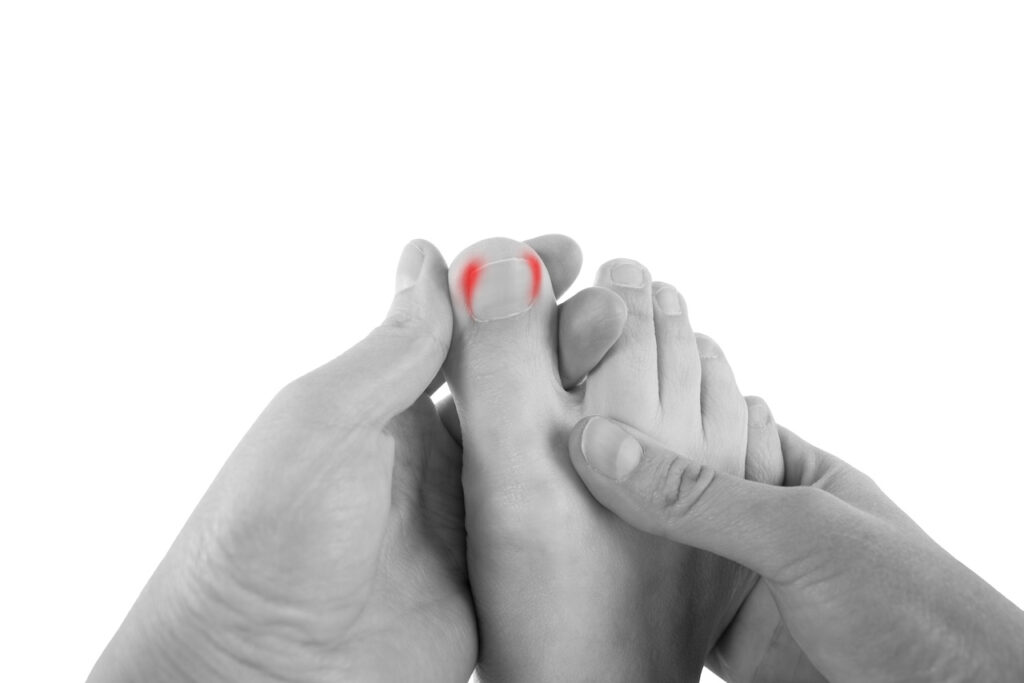
Anyone who’s had an ingrown toenail knows it’s painful. The nail grows into the skin, causing an inflamed, infection-prone wound—a recurring issue for many.
What you might not know is the key link between ingrown toenails and hypergranulation tissue. This excess tissue signals that the condition has moved beyond the early stages.
To provide more clarity, the Foot Specialists of Birmingham explain in this blog what hypergranulation tissue is, why it forms, and what it means for treating ingrown toenails.
What is Hypergranulation Tissue?
Hypergranulation tissue is excess healing tissue that forms when the body’s natural healing and repair response becomes overly aggressive.
Instead of stopping, the tissue keeps growing—often bright red, soft, and prone to bleeding.
When it comes to ingrown toenails, this tissue develops as the body reacts to ongoing irritation from the nail pressing into the skin.
How Ingrown Toenails Trigger Hypergranulation Tissue
Ingrown toenails cause a persistent wound when the nail edge pierces the skin, leading to inflammation and infection. As healing begins, the body produces granulation tissue, but ongoing irritation from the nail can cause excessive tissue growth. The body may treat the nail as a foreign object, resulting in overgrown tissue that can surround or partially cover the nail.
What It Looks and Feels Like
Hypergranulation tissue usually appears as raised, red tissue along the nail edge. It is often soft and tender, and it bleeds easily with minor contact. As the condition progresses, patients may experience swelling, moisture, and increased pain, particularly in advanced cases.
Treating Hypergranulation Tissue in Ingrown Toenails
Ingrown toenail treatment focuses on removing the source of irritation, which is the ingrown nail; this may require removing part of the nail to relieve pressure on the skin. In advanced cases, your podiatrist may also remove the excess tissue to promote healing. If the nail is not addressed, hypergranulation tissue is likely to recur because the underlying cause persists.
Why Early Treatment Is Critical
Hypergranulation tissue indicates the ingrown toenail has advanced beyond a mild stage. At this point, symptoms such as pain, bleeding, and infection are more likely, and treatment becomes more complex. Early intervention can prevent progression, reduce complications, and make recovery simpler and more predictable.
See a Podiatrist in Birmingham
When you have a bad ingrown toenail, the wisest course of action isn’t home care; it’s going to a podiatrist with a speciality in ingrown toenails, like Foot Specialists of Birmingham.
If you’re tired of recurring ingrown toenails and the other issues they can trigger, don’t wait for them to miraculously improve, as that’s highly unlikely. We’re here to help you get back on your feet and have many treatment options available. Call (205) 445-0661 or contact us online, and our team will be happy to schedule an appointment with Dr. Linde for your ingrown toenail.

