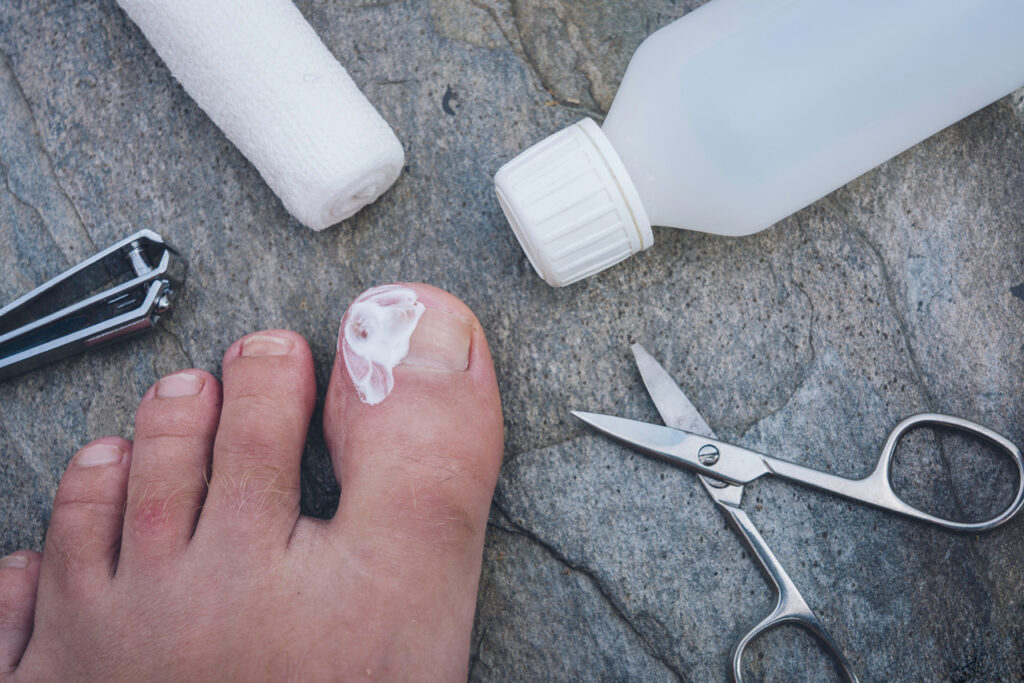
Even though you can keep them out of sight—tucked away into a closed-toed shoe—you don’t forget about your ingrown toenail once you have one. And even though they can “just go away if you leave them alone,” they usually don’t.
After a few days of (attempting to) walking around with a painful ingrown toenail, you just want it to stop. Desperate to get it over with, you go home and look up DIY ingrown toenail treatments.
But wait—before you get out the clippers, files, or dental floss, we urge you to be careful about which ones you try and to follow this guide from our podiatrist for safe ingrown toenail solutions.
DIY Ingrown Toenail Treatments That DON’T Work
DIY Ingrown Toenail Surgery
You’re reading that heading correctly. Some people with ingrown toenails—especially recurring, chronic ingrown toenails—get so fed up with the pain and discomfort that they try to cut off the affected area of skin and toenail themselves.
The motivation behind this is understandable; for such a little thing, ingrown toenail pain can be so bad that it is debilitating. However, attempting DIY ingrown toenail surgery is not safe.
Infection is the highest risk of performing your own “surgery,” whether by worsening an existing infection or creating a new one by digging into uninfected tissues while tending to another infected wound. You could also cut too deeply and hit a vein, damage your tissue, and create permanent scars. Plus, you may not have even needed actual surgery, as podiatrists offer various treatment interventions that help many patients with ingrown toenails without minor surgery.
Ultimately, you will save more money and avoid the risk of other medical complications that wouldn’t have occurred in a controlled medical environment if you had gone to a podiatrist first.
Cutting Toenails in a V or Curve
Some people believe that cutting toenails in a curved or V shape will help prevent them from growing into the sides of the surrounding toe tissue. However, this can have the opposite effect; it can introduce bacteria and weaken the nail. At best, this method is simply unhelpful; at worst, it can risk bacterial infection.
Removing an Affected Toenail with Floss
People with ingrown toenails often think the only solution is to remove the nail, and many try to do so with dental floss.
Don’t try this hack; lifting a toenail that is still partially attached can open the skin and create a new wound, and it can get infected. In many cases, people who lift their toenails off the nailbeds don’t grow them back fully for at least a year, if not longer.
Sometimes, depending on the trauma it causes, this method can cause patients to never grow their toenails back. Trust us on this one; it’s not worth trying.
Things Worth a Try
Proper Cleaning
Proper wound cleaning and regularly changing bandages are among the best things you can do for an ingrown toenail, infected or not. After you clean your wound with an antiseptic, consider applying an antibacterial ointment. If you have an infection, we encourage you to see a physician to get antibiotics ASAP. However, wound cleaning and careful, consistent bandage changes can go a long way and are sometimes enough for very minor infections of shallow wounds.
Foot Soaks
Warm water foot soaks can be helpful for cleaning the wound and encouraging recovery. Sometimes adding Epsom salts to the water can offer extra cleaning power, especially for a seriously gunky nail. But you should avoid soaking in Epsom salts more than 1-2 times a week to avoid disrupting the natural healing and tissue regeneration process.
Wearing Proper Footwear
One of the causes of ingrown toenails for many people is wearing shoes that are too narrow or too small overall. The crowding in a too-snug shoe literally pushes the sides of the toenails into the surrounding tissue. To relieve an existing ingrown toenail and to avoid developing others, make sure the toebox of your shoes leaves plenty of “breathing room” for all of your toes.
Visit a Podiatrist
When you have an ingrown toenail—especially if you have them chronically—the best move for the best outcome isn’t something you do at home; it’s going to an expert like Foot Specialists of Birmingham.
If you’re suffering from painful ingrown toenails, please know you don’t have to. We’re here to help you get back on your feet, with many treatment options available. Call (205) 445-0661 or contact us online, and our team will be happy to schedule an appointment with Dr. Linde for your ingrown toenail condition.

