New treatments for plantar fasciitis are constantly in clinical development and becoming available to the public, as it’s one of the world’s most common foot conditions.
Some of the latest treatments approved include Botox, radiofrequency, and prolotherapy. In this blog, our podiatry experts from the Foot Specialists of Birmingham are here to explain these treatment options and how they work, which can help you decide which may be best to discuss with a podiatrist for your personal treatment plan.
New Treatments for Plantar Fasciitis
The three new treatments for plantar fasciitis we’re exploring are all non-surgical: the first two manage symptoms, while the third is more targeted.
Radiofrequency Nerve Ablation (RFNA)
Radiofrequency nerve ablation (RFNA) is a minimally invasive treatment that uses targeted heat generated by radiofrequency energy to disrupt pain signals from the affected nerves in the heel. By reducing the nerve’s ability to transmit pain, many patients experience significant relief and improved daily function, especially when other conservative treatments have not worked.
Like other advanced interventions, RFNA is designed to manage symptoms rather than directly repair the underlying plantar fascia tissue. It is often considered for chronic or persistent cases of plantar fasciitis to help patients stay active and comfortable while exploring or preparing for longer-term treatment options.
Botox Injections
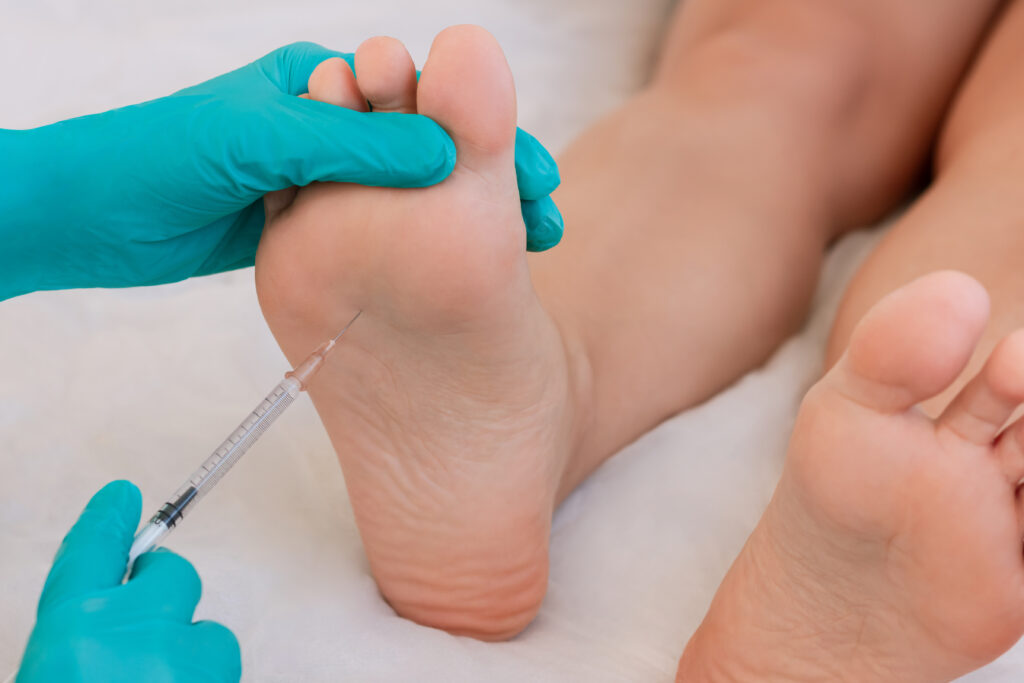
Botox treatments for plantar fasciitis involve injecting IncobotulinumtoxinA (IBTA) into the bottom of a patient’s foot. Many patients find that their plantar fasciitis pain decreases with this treatment, allowing their foot function to improve significantly or even return to normal.
This treatment does not correct or repair the root of plantar fasciitis; it targets the pain symptoms. Sometimes, it’s to keep patients with more severe plantar fasciitis as comfortable as possible while they’re not yet ready for a planned/inevitably necessary surgery.
Dextrose Prolotherapy Injections
Regenerative therapies such as dextrose prolotherapy and platelet-rich plasma (PRP) injections are among the newest medical treatments available for plantar fasciitis and other musculoskeletal disorders1. These therapies stimulate tissue regeneration by gently irritating injured tissue to trigger the body’s natural healing response.
Dextrose prolotherapy (DPT) is one such regenerative therapy. It involves injecting a dextrose (sugar water) and lidocaine solution into the plantar fascia through the bottom of the foot. In one clinical review, data on dextrose prolotherapy indicated that the new treatment for plantar fasciitis was safe and effective with potential long-term benefits.
Get Plantar Fasciitis Treatment in Birmingham, AL
If you’re in the Birmingham metro area and you’re suffering from diminished foot function and/or pain from plantar fasciitis (or you suspect that’s the root of your symptoms), you need to visit Foot Specialists of Birmingham.
When you call us at (205) 445-0661, our knowledgeable podiatry office staff can help you verify your insurance and coordinate your new patient visit with Dr. Linde. If you have any questions or concerns you need answers to before making an appointment, fill out the form at the bottom of this page.
We look forward to helping you get back on your feet!

